When Mental Health Crisis Reaches the Emergency Department: What Pediatric Behavioral Health Providers Need to Know
New data out of England shows a 36 percent rise in children reaching emergency departments in mental health crisis since 2019, with the fastest growth among children as young as six. The pattern is familiar in the United States too, where roughly half a million children receive ED care for acute psychiatric emergencies every year, many boarding for days without an available psychiatric bed. This article connects that trend to what U.S. pediatric behavioral health providers actually need to revie

Introduction
A new analysis out of England landed hard this week. NHS doctors are warning that children as young as six are showing up at A&E units in mental health crisis, with families telling reporters they had nowhere else to turn. The Royal College of Paediatrics and Child Health found that attendances by six to seventeen-year-olds for mental health concerns rose 36 percent between 2019 and 2025, and the fastest growth happened among the youngest children in that range, six to nine-year-olds, up 62 percent over the same period. Some families waited more than 12 hours. Hundreds of children waited three days or longer before a safe discharge or appropriate psychiatric placement could be arranged.
Read the coverage, and the natural first reaction is to think of it as a story about the NHS. It isn't only that. The same pattern, children with nowhere else to turn ending up in an emergency department because timely outpatient or community-based behavioral health care wasn't available to them, is a documented, ongoing reality in the United States too. This article uses that England data as the starting point, but the real focus is the U.S. side of this problem: what it means for pediatric behavioral health providers, and specifically, what it means for the referral, authorization, documentation, and billing workflows that determine whether crisis care actually connects a child to ongoing treatment or just becomes an isolated, unpaid, unrepeated event.
The Warning Sign: More Children Are Reaching Emergency Departments in Mental Health Crisis
The England figures are worth sitting with for a moment because of what they represent, not because the exact numbers translate directly to U.S. practice. According to the RCPCH analysis of NHS England data obtained through Freedom of Information requests, there were 75,491 A&E attendances by children and young people for a mental health concern in 2025, up from 55,525 in 2019. About 8 percent of these children, more than 6,200, waited over 12 hours to be seen. Long-stay boarding, children waiting three days or more in the emergency department before reaching an appropriate discharge destination, increased roughly threefold over the same period.
Doctors quoted in the coverage were direct about what's driving this. Dr. Sam Jones of the RCPCH described a lack of wider mental health care and crisis support across much of the country, meaning vulnerable children weren't getting help until they reached a genuine breaking point. That's the pattern worth carrying into the U.S. conversation: emergency departments becoming a default entry point not because they're the right setting, but because something upstream, outpatient access, community crisis services, timely referral, wasn't there when it was needed.
Why an Emergency Department Cannot Replace Ongoing Behavioral Health Care
An emergency department is built to stabilize an acute crisis. It isn't built to provide ongoing behavioral health treatment, and it was never designed to hold a child in psychiatric distress for days at a time while a more appropriate placement is located. Extended boarding in a loud, unfamiliar, clinically mismatched environment can worsen the very symptoms that brought the child there in the first place.
This matters for providers beyond the immediate clinical concern. An ED crisis visit that doesn't connect cleanly to a follow-up outpatient or community-based plan is, functionally, a missed opportunity. The child stabilizes, gets discharged, and re-enters the same gap in care that led to the crisis visit to begin with, often without a warm handoff to the outpatient behavioral health system that was supposed to catch them.
The U.S. Question: What Does This Trend Mean for Pediatric Behavioral Health Providers?
The United States has its own well-documented version of this pattern, and the numbers are sobering in their own right. More than 1 in 6 children in the U.S. carry a mental health diagnosis, and less than half of those children receive outpatient services for it. That gap between diagnosis and treatment access is a key driver behind a well-documented rise in emergency department visits for pediatric psychiatric emergencies. Annually, approximately half a million children receive ED care in the U.S. for acute psychiatric conditions.
A study published in Pediatrics in March 2025, analyzing boarding data from 40 tertiary children's hospitals between 2017 and 2023, found that boarding length of stay has increased over that period, with sustained high levels since the onset of the COVID-19 pandemic. Children with both medical and psychiatric complexity experienced the most prolonged boarding, with some waiting nine days or longer for an appropriate placement. A separate 2025 study focused specifically on Medicaid-enrolled youth found that among more than 255,000 pediatric ED visits for mental health conditions in 2022, more than 1 in 10 resulted in three to seven days of boarding, with an average boarding length of 4.5 days, and boarding was especially common among children presenting with suicide-related behaviors and depressive disorders.
For pediatric behavioral health providers, this isn't a background statistic. It's a description of what's actually happening to a meaningful share of the patients your referral network is supposed to be catching before they ever reach that point.
When Crisis Care Becomes a Billing and Documentation Challenge
Here's where this trend becomes directly relevant to how a behavioral health practice or hospital-based program actually operates day to day. A child in psychiatric crisis, boarding in an ED for days without a clear inpatient status, doesn't map cleanly onto the billing structures most providers are used to. Standard emergency department evaluation and management coding assumes a single, relatively contained encounter. A multi-day boarding stay, where the child isn't formally admitted as inpatient but also isn't discharged, creates real ambiguity in how that extended period of care gets documented and billed, and that ambiguity has direct financial consequences for the hospital or program absorbing the cost of care that isn't cleanly reimbursed.
Downstream, the outpatient or crisis-services provider trying to bill for the actual crisis intervention faces a separate but related challenge: crisis psychotherapy and crisis intervention codes carry some of the strictest documentation requirements and highest audit scrutiny in behavioral health billing, which means a rushed or incomplete note written in the middle of an actual crisis can quietly become a denied claim weeks later.
From Intake to Claim: Where Behavioral Health Documentation Matters
Every point in the pathway from a child's initial crisis presentation to the final paid claim depends on documentation created under difficult, time-pressured circumstances.
- Intake needs to capture acuity clearly enough to support both the immediate crisis billing code and any later utilization review request for a higher level of care.
- The crisis encounter itself needs documentation specific enough to justify codes like CPT 90839, reserved for situations involving imminent risk of harm, acute psychosis with severe decompensation, or grave disability requiring urgent stabilization, rather than a general behavioral health visit note.
- Any escalation, from outpatient to intensive outpatient, from ED crisis intervention to inpatient psychiatric admission, needs the same underlying clinical detail carried forward, not reconstructed later from memory once the acute moment has passed.
- The eventual claim is only as strong as the weakest link in that chain, since a payer reviewing a crisis claim after the fact has no context beyond what's written down.
Authorization, Eligibility, and Referral Requirements Can Complicate Access
A genuine crisis doesn't pause for prior authorization, but the claims process built around it often behaves as though it should. A few specific friction points show up repeatedly in pediatric behavioral health crisis care.
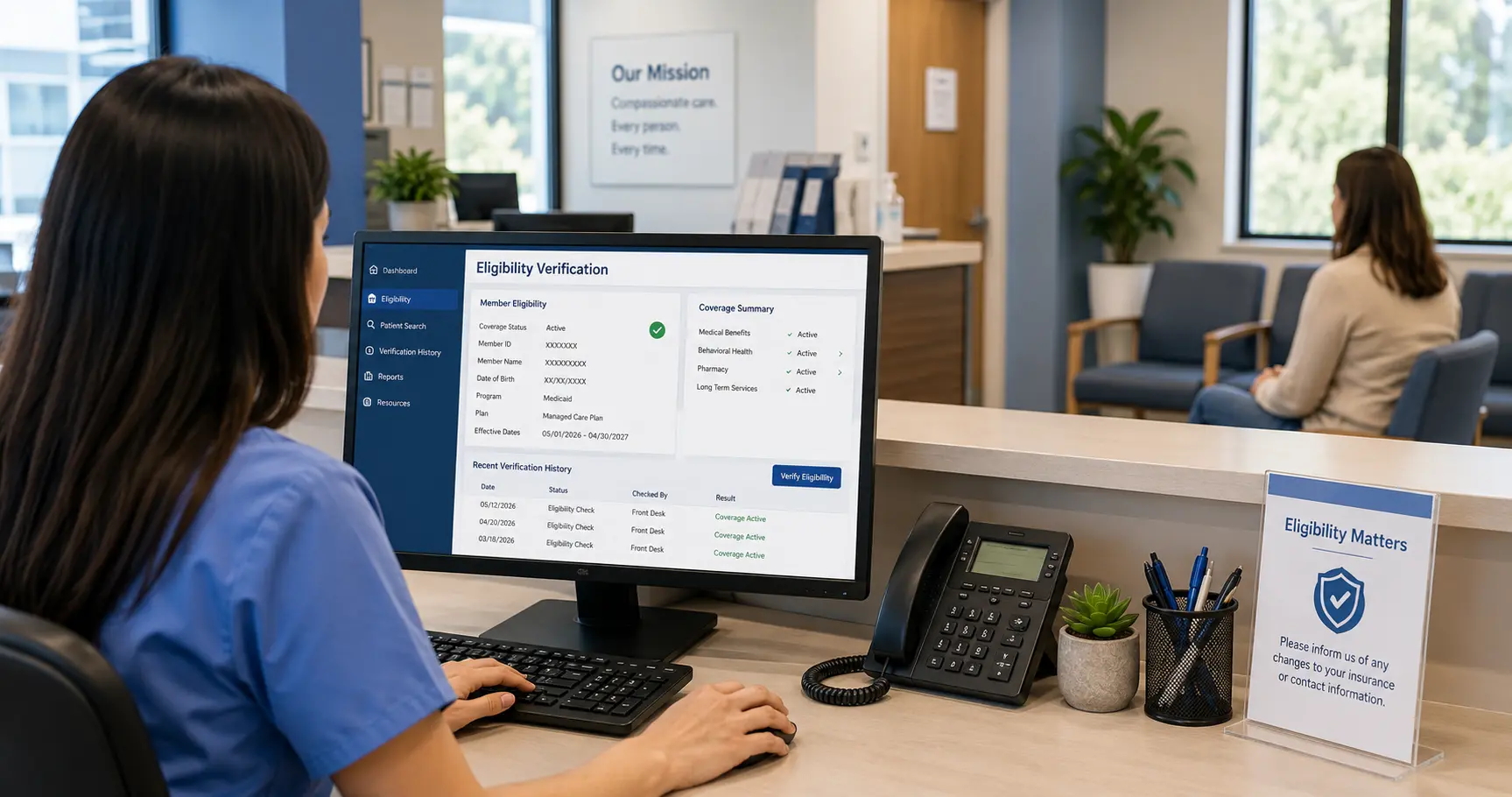
- Eligibility verification gaps. A child arriving in crisis may have Medicaid coverage that's active but not yet reflected accurately in the receiving facility's system, particularly if a recent redetermination or managed care plan change occurred.
- Authorization requirements for the next level of care. Moving a child from ED crisis stabilization to inpatient psychiatric admission, or from an initial crisis contact to intensive outpatient treatment, often requires prior authorization that wasn't obtained in advance, since the need itself was unplanned.
- Referral requirements that don't account for crisis timing. Some plans require a specific referral pathway for behavioral health services that simply doesn't align with how a psychiatric emergency actually unfolds.
- State-by-state Medicaid variation. Crisis intervention and crisis stabilization services are frequently billed through HCPCS codes such as H2011 or S9485 under Medicaid, rather than the CPT crisis psychotherapy codes commercial plans typically use, and which code family applies depends entirely on the specific state's behavioral health fee schedule.
Why Crisis-Related Behavioral Health Claims May Face Reimbursement Problems
Crisis psychotherapy codes CPT 90839 and 90840 exist specifically for acute psychiatric emergencies, imminent risk of harm, acute psychosis with severe decompensation, or grave disability requiring urgent stabilization. Because they're reserved for genuinely urgent, high-acuity situations, payers scrutinize them closely, and a few specific rules are worth knowing.
- The Medicare National Correct Coding Initiative Policy Manual, with rules specific to mental health CPT codes effective January 1, 2026, establishes same-day bundling restrictions that apply separately from general medical coding logic, and violating them generates automatic denials.
- The interactive complexity add-on code, CPT 90785, cannot be appended to 90839 or 90840, since the complexity involved in a crisis encounter is already built into the crisis code itself. Appending it anyway is a common, avoidable denial trigger.
- Crisis stabilization units and mobile crisis teams are frequently reimbursed through Medicaid HCPCS codes rather than CPT crisis codes, and billing the wrong code family for the setting is a recurring source of denied claims.
- Because these codes are reviewed closely, documentation gaps that might pass unnoticed on a routine outpatient visit are far more likely to trigger a denial or an audit request on a crisis claim.
What Providers Should Document Before and After a Behavioral Health Crisis Encounter
- The specific clinical indicators supporting acuity, imminent risk, acute decompensation, or grave disability, rather than a general statement that the patient presented in crisis.
- Start and stop times for the crisis encounter, since crisis psychotherapy codes are time-based and require this level of specificity.
- The clinical reasoning behind any level-of-care recommendation, since the same note frequently needs to support both the crisis billing claim and a subsequent utilization review request.
- Coordination and communication with caregivers, referring providers, or receiving facilities, which supports both continuity of care and the medical necessity narrative for the encounter.
- Follow-up plan and referral details, since this is the piece of documentation most likely to get rushed in the moment and most likely to matter later when tracking whether the child actually connected to ongoing care.
Building a Better Workflow Between Crisis Services and Outpatient Care
The gap between an ED crisis visit and a child's next outpatient appointment is exactly where continuity of care tends to break down, and it's also where a lot of preventable billing friction lives. A few structural fixes make a real difference.
- Establish direct, named referral pathways between emergency departments and outpatient or community-based behavioral health providers, rather than relying on a generic discharge instruction sheet.
- Build a standard warm handoff process, ideally including a scheduled follow-up appointment before the child leaves the ED, not just a recommendation to schedule one.
- Share relevant clinical documentation from the crisis encounter with the receiving outpatient provider, so continuity of care doesn't depend on the family relaying details themselves.
- Track whether referred patients actually complete their follow-up appointment, since a referral that doesn't result in a completed visit hasn't actually closed the gap.
Common Mistakes Behavioral Health Practices Make With Crisis Claims
- Documenting a crisis encounter with general behavioral health visit language instead of the specific acuity indicators crisis codes require.
- Appending CPT 90785 to crisis psychotherapy codes, when interactive complexity is already built into 90839 and 90840.
- Billing crisis stabilization or mobile crisis services under the wrong code family for the specific payer, particularly confusing Medicaid HCPCS codes with commercial CPT crisis codes.
- Treating the crisis note as sufficient on its own without capturing the additional detail a subsequent authorization request for a higher level of care will need.
- Assuming prior authorization requirements don't apply to a crisis-driven escalation in care, when many payers still require it even when the underlying need was unplanned.
- Not verifying eligibility carefully for a child presenting acutely, especially when recent Medicaid redetermination activity may not yet be reflected accurately in the system.
What Behavioral Health Practices Can Review Now
- Confirm your documentation templates for crisis encounters explicitly prompt for the specific acuity language payers require, rather than relying on general clinical narrative.
- Review your organization's referral pathway between crisis and emergency settings and your own outpatient services, and identify where warm handoffs are, and aren't, currently happening.
- Audit a sample of recent crisis claims for common, avoidable errors, incorrect code family, improperly appended add-on codes, missing time documentation.
- Confirm your billing team understands which crisis-related codes apply under which payer, particularly for practices serving a mixed Medicaid and commercial population.
- Build a tracking mechanism for whether ED-referred patients actually complete outpatient follow-up, since this data point matters clinically and also helps demonstrate program effectiveness to payers and stakeholders.
Expert Recommendations
Practices and hospital-based programs handling pediatric behavioral health crisis care well tend to treat the crisis encounter as the beginning of a documented care pathway, not an isolated event. That reframing changes how the intake and crisis notes get written from the start, since staff writing with the next step already in mind produce documentation that holds up both for the immediate claim and for whatever authorization or referral comes after it.
It's also worth building specific staff training around the crisis code bundling rules that took effect under the Medicare NCCI Policy Manual update in January 2026, since these rules are distinct from general medical billing logic and easy to violate without dedicated behavioral health billing expertise on the team.
Finally, given how much of this problem traces back to insufficient outpatient access in the first place, behavioral health practices with any capacity to expand same-week or urgent outpatient appointment availability are addressing the root driver of ED-based crisis presentations directly, not just improving the billing mechanics around them.
Frequently Asked Questions
What did the recent England data show about children in mental health crisis?
An RCPCH analysis of NHS England data found that A&E attendances by children aged six to seventeen for mental health concerns rose 36 percent between 2019 and 2025, with the fastest increase, 62 percent, among children aged six to nine.
Does the United States have a similar pediatric mental health emergency department trend?
Yes. More than 1 in 6 U.S. children carry a mental health diagnosis, less than half receive outpatient services, and approximately half a million children receive ED care annually for acute psychiatric emergencies, with documented increases in boarding length of stay since 2017.
What is pediatric psychiatric boarding?
Boarding refers to a child remaining in the emergency department, awaiting an appropriate psychiatric bed or placement, often without formal inpatient admission status, sometimes for multiple days.
What CPT codes apply to crisis psychotherapy?
CPT 90839 covers the first 60 minutes of crisis psychotherapy, with CPT 90840 as an add-on code for each additional 30 minutes, reserved specifically for situations involving imminent risk of harm, acute psychosis with severe decompensation, or grave disability requiring urgent stabilization.
Can CPT 90785 be billed alongside crisis psychotherapy codes?
No. The interactive complexity add-on code, CPT 90785, should not be appended to CPT 90839 or 90840, since the complexity involved in a crisis encounter is already accounted for within the crisis codes themselves.
Do Medicaid programs use the same billing codes as commercial payers for crisis services?
Not always. Crisis stabilization units and mobile crisis teams are frequently reimbursed by state Medicaid programs through HCPCS codes such as H2011 or S9485, rather than the CPT crisis psychotherapy codes commercial payers more commonly use, and the applicable code family depends on the specific state's behavioral health fee schedule.
What changed with mental health CPT coding rules in 2026?
The Medicare National Correct Coding Initiative Policy Manual, effective January 1, 2026, established same-day bundling rules specific to mental health CPT codes, separate from general medical coding bundling logic, and violating these rules results in automatic claim denials.
Why do crisis-related behavioral health claims face more scrutiny than routine visits?
Because crisis codes are reserved for genuinely urgent, high-acuity situations, payers review them closely, which means documentation gaps that might pass unnoticed on a routine visit are more likely to trigger denials or audit requests on crisis claims.
What should a warm handoff between an ED and outpatient behavioral health provider include?
Ideally, a scheduled follow-up appointment established before discharge, shared clinical documentation from the crisis encounter, and a tracking mechanism to confirm the referral actually results in a completed outpatient visit.
How does prior authorization complicate pediatric behavioral health crisis care?
A crisis, by definition, isn't planned, but many payers still require prior authorization for escalated levels of care, such as inpatient psychiatric admission, which can create friction even when the underlying clinical need is unplanned and urgent.
Conclusion: The Goal Is to Connect Children to Care Before Crisis Becomes the Entry Point
The England data is a warning about what happens when the system upstream of the emergency department isn't strong enough to catch children before they reach a breaking point. The U.S. picture, roughly half a million pediatric psychiatric ED visits a year, boarding stays that have grown longer since 2017, a documented gap between diagnosis and outpatient access, tells a version of the same story. For pediatric behavioral health providers, the response isn't just clinical. It's making sure the referral pathways, authorization processes, documentation habits, and billing accuracy behind crisis care actually connect a child to what comes next, rather than letting the crisis visit become an isolated, disconnected event.
Edge RCM CTA
Crisis care carries some of the highest documentation standards and closest payer scrutiny in behavioral health billing, and getting it wrong doesn't just cost revenue, it can slow down the very continuity of care a child in crisis needs most. Edge RCM works with pediatric and behavioral health practices on crisis claim coding accuracy, prior authorization support, eligibility verification, and denial prevention specific to behavioral health billing rules. If your practice or program is navigating the operational side of rising pediatric behavioral health crisis volume, Edge RCM can help you build a billing and documentation process that keeps pace with it.